

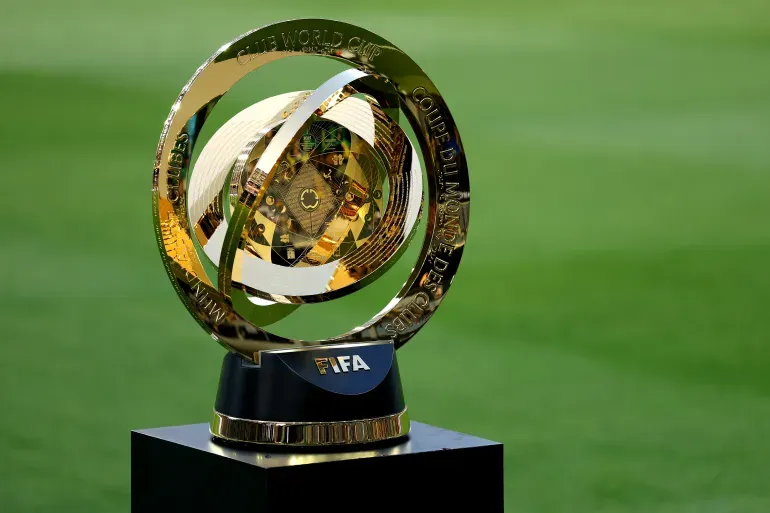
FIFA Club World Cup expansion is no longer just a structural adjustment to an existing tournament. It represents a dramatic shift in how global club football is organized, commercialized, and experienced by fans across continents.
For decades, the tournament existed in a compact format, often viewed as a prestigious but brief competition dominated by European champions. Now, with a 32-team structure and a quadrennial schedule, the entire football ecosystem is preparing for something far more ambitious.
This transformation is not happening in isolation. It is unfolding within a rapidly evolving sports industry shaped by media rights growth, global fanbases, digital engagement, and financial competition between leagues. To understand what this means, we need to explore the history, the reasoning, and the real-world consequences behind the FIFA Club World Cup expansion.
The Origins of the Club World Cup
The modern Club World Cup was officially organized by FIFA in 2000, although its roots trace back to the Intercontinental Cup era. That earlier competition primarily featured European and South American champions.
For years, European powerhouses like Real Madrid, FC Barcelona, and Bayern Munich dominated the tournament, reinforcing the perception that it was more ceremonial than competitive.
While clubs from Asia, Africa, and North America participated, the competitive gap often seemed wide. Attendance, broadcasting interest, and commercial intensity rarely matched tournaments like the UEFA Champions League.
That context helps explain why the FIFA Club World Cup expansion has been framed as a reinvention rather than a simple upgrade.
Why the FIFA Club World Cup Expansion Happened
Growing Global Fanbases
Football is no longer regionally concentrated. Clubs now maintain massive followings in Asia, Africa, and the Americas through streaming, social media, and international tours.
The FIFA Club World Cup expansion aims to reflect this globalization. Instead of limiting representation to a handful of continental champions, the new format includes 32 teams, mirroring the structure of the men’s World Cup.
This broader inclusion creates more matchups, more storylines, and more pathways for emerging clubs to showcase themselves on a truly global stage.
Financial Sustainability and Commercial Growth
Modern football is deeply connected to broadcasting revenue. Multi-club ownership models, private equity involvement, and digital platforms have transformed the sport’s financial architecture.
By expanding the tournament, FIFA significantly increases commercial inventory. More matches mean more broadcast slots, sponsorship opportunities, and ticket sales.
From an economic standpoint, the FIFA Club World Cup expansion creates a property capable of rivaling continental competitions in scale and revenue.
How the New Format Works
The redesigned tournament features 32 clubs divided into group stages, followed by knockout rounds. It will be played every four years, similar to the national team World Cup.
This format dramatically increases the number of matches compared to the previous annual seven-team version.
Clubs qualify based on continental performance across multiple seasons. European teams still receive significant allocation due to coefficient rankings, but other confederations gain expanded representation.
This structural shift ensures that the FIFA Club World Cup expansion is not just bigger but more competitive and commercially attractive.
Competitive Balance and Global Representation
One of the most debated aspects of the FIFA Club World Cup expansion is competitive balance.
Critics argue that European clubs, backed by larger budgets and deeper squads, will continue to dominate. Supporters counter that exposure to higher-level competition accelerates development for clubs from Africa, Asia, and North America.
For example, imagine a rising African champion facing an established European giant. Even if the result favors the latter, the experience can elevate tactical understanding, scouting networks, and global recognition.
From a development perspective, this tournament could reshape pathways for talent outside Europe’s traditional power centers.
FIFA Club World Cup Expansion and Player Workload
A Growing Calendar Concern
Professional players already navigate packed schedules that include domestic leagues, continental competitions, and international tournaments.
The introduction of a larger global club event has sparked concern from players’ unions and managers. Coaches worry about fatigue, injuries, and long-term performance sustainability.
Balancing commercial ambition with player welfare is critical. FIFA has argued that the quadrennial structure reduces annual congestion compared to the previous format.
Still, discussions continue about how the FIFA Club World Cup expansion integrates with domestic league calendars and continental championships.
The Political and Strategic Dimension
Global football governance is rarely simple. Expanding a tournament of this scale involves negotiation with leagues, clubs, confederations, and broadcasters.
Some European clubs initially expressed skepticism, preferring to protect the prestige and profitability of continental tournaments. Others saw opportunity in a new revenue stream and global exposure.
From a governance standpoint, the FIFA Club World Cup expansion strengthens FIFA’s influence over elite club football, an area historically dominated by continental bodies.
This shift has broader implications for power dynamics within the sport.
Economic Impact on Host Nations
Hosting a 32-team tournament is a major logistical undertaking.
Infrastructure, stadium preparation, security, hospitality, and tourism planning all scale significantly compared to the previous format.
For host countries, the FIFA Club World Cup expansion offers an opportunity to showcase infrastructure and attract global tourism. It can also serve as a testing ground for future major tournaments.
However, economic success depends on execution. Stadium utilization, ticket pricing, and fan travel patterns will determine the real financial return.
Broadcasting and Digital Transformation
Modern football consumption has shifted dramatically toward streaming and mobile platforms.
The expanded tournament creates new inventory for digital-first broadcasting deals. Global audiences can follow clubs from different continents in prime-time windows tailored to specific regions.
The FIFA Club World Cup expansion fits neatly into this new media landscape, where global tournaments drive subscription growth and cross-border engagement.
Younger fans increasingly consume highlights, tactical analysis, and behind-the-scenes content online. A 32-team format naturally produces more narratives and digital storytelling opportunities.
Club Strategy and Squad Building
With a larger tournament on the horizon, elite clubs must rethink squad depth and rotation strategies.
Participating in the expanded event demands resilience, travel adaptability, and tactical flexibility.
Clubs that once treated the old tournament as a short end-of-year obligation now face a multi-week global competition. That reality influences preseason planning, transfer strategies, and sports science investment.
The FIFA Club World Cup expansion could indirectly accelerate investment in youth academies and data analytics to maintain competitive advantage across multiple competitions.
Impact on Emerging Markets
Football development in regions such as North America, Asia, and parts of Africa has grown rapidly over the past decade.
Clubs from leagues outside Europe crave meaningful global exposure. Participating in a 32-team tournament increases visibility for sponsors and players alike.
For many supporters, seeing their local champion face a global powerhouse transforms abstract fandom into lived experience.
In that sense, the FIFA Club World Cup expansion represents more than competition. It symbolizes recognition of football’s truly global footprint.
Expert Perspectives and Industry Analysis
From an EEAT standpoint, evaluating the FIFA Club World Cup expansion requires attention to governance transparency, financial sustainability, and long-term competitive balance.
Industry analysts note that global tournaments succeed when they balance commercial ambition with sporting integrity.
If qualification pathways remain transparent and merit-based, credibility strengthens. If scheduling respects player welfare, stakeholder trust increases.
Experience from previous global tournaments suggests that clarity of structure and consistent branding are essential for sustained fan engagement.
Risks and Criticisms
No major reform is without skepticism.
Some observers worry that expanding elite competitions widens financial disparities between clubs that qualify and those that do not. Prize money distribution will be closely monitored.
Others fear oversaturation. With domestic leagues, continental cups, and international tournaments already competing for attention, adding another large-scale event may stretch audiences.
Still, proponents argue that global football’s appetite continues to grow. If managed strategically, the expanded tournament could complement rather than compete with existing competitions.
The Long-Term Vision of FIFA Club World Cup Expansion
The long-term success of the FIFA Club World Cup expansion depends on execution.
Strong governance, transparent qualification criteria, fair revenue distribution, and alignment with player welfare policies will determine whether the tournament becomes a cornerstone of global club football.
Fans ultimately decide the fate of competitions. If storylines resonate, if matches feel meaningful, and if global rivalries intensify, the expanded format may redefine club football’s international landscape.
Football has always evolved. From continental tournaments to global championships, the sport grows alongside its audience.
The expanded Club World Cup signals that the next chapter of club football will be more interconnected, more commercial, and undeniably more global.
Read also:
fc barcelona vs villarreal cf lineups
borussia dortmund vs fc barcelona lineups
mumbai city fc vs jamshedpur fc lineups
jamshedpur fc vs northeast united fc lineups